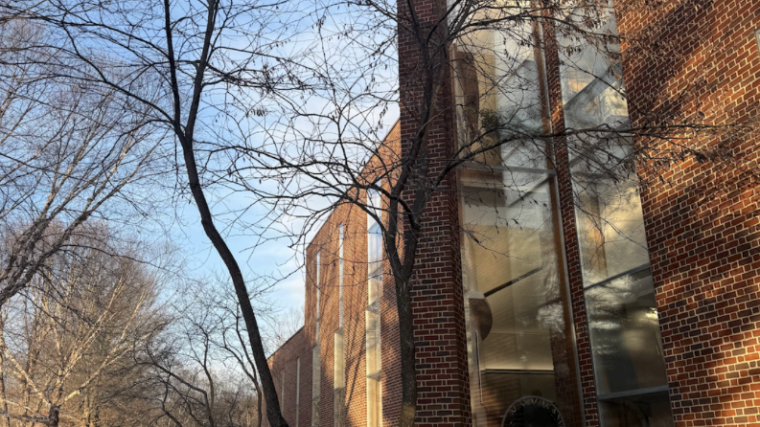
Students in Dr. Ava Goodale’s Environmental Science Research Course at Deerfield Academy collect environmental data as volunteer scientists, analyze those data in a technical report, and create an interpretive writing piece that tells a story about their experience. The students featured in this series participated in Nature’s Notebook campaigns and were kind enough to share their writing with us.
About Eleanor
Hi, my name is Eleanor duPont and I am a senior at Deerfield Academy. I love playing sports, spending time with friends, and engaging with the environment! This year I am taking my second year of environmental science where we conduct many research projects that strive to understand patterns in the nature around us. This piece was written in response to one of our research projects about Eastern Redbuds on our campus!
A Favor to Nature
This story is not just about the study of different tree phenophases; it digs deeper into the relationship between humans and nature. It touches on the interdependence of humans and the environment and allows participants to acknowledge the immense impact nature has on human existence. The effects of climate change are already impacting life on earth and will continue to have an impact on future generations whether we realize it or not. This project has allowed me to realize that small changes in my life can help benefit the environment as a whole. Hopefully, by reading this you will realize that phenology has begun to respond to changes within the environment. If we become attuned to this fact, we can also respond to how climate change is impacting our lives.
When learning about phenology in my Environmental Science course, our class participated in a citizen science project sponsored by the USA National Phenology Network’s “Nature’s Notebook.” The purpose of our study was to analyze phenophases of three Eastern Redbud trees scattered across the Deerfield Academy campus. On my first day of the project, I walked into class and was met with a box containing a confusing assortment of papers and complicated data sheets. I read the word “phenophase” on one of the sheets and was immediately bewildered by the scientific language. After getting over my instant confusion, I followed the map provided in the kit which led me to our study trees. I quickly realized that phenophase meant the different phases the trees go through over the course of the year. On the sheet, I recorded both percentages of leaves that were colored and still on the tree. Over the course of the fall, different students in my class took the same journey to the three trees and recorded the same data on the sheets. We then submitted these data to Nature’s Notebook to help further the studies done by the USA National Phenology Network. According to the data collected, there was no significant difference in when each tree entered the leaf color phenophase, nor a difference in when the leaves fell off the trees. However, our results were consistent with the assumption that as the days become shorter, leaves begin to break off the trees in order for the tree to become dormant for the cold winters. Though the objective of this project was to analyze redbud phenology in the fall, these data are crucial in understanding how climate change could affect a tree’s phenophases in the spring growing season.
Throughout this project, I not only learned a lot about why tree phenophases change with the changing seasons, but I also developed a much deeper appreciation for how nature plays such a quiet but significant role in human life. I used to think that leaves just fell off the trees because it was cold outside, but I never really cared about why this actually happens. I never cared about or even realized why nature changes, but throughout this project I have developed a keen interest in how nature responds to changes in the environment. After watching how the trees that we walk past everyday have already started adapting to the changing climate, it provided me with a sense of hope that we will be able to help the planet. It changed my outlook on the climate dilemma from feeling obligated to help the environment, to genuinely feeling a sense of belonging with nature and devotion to help put this long-lasting issue to an end.
Whether it be the natural change of seasons or the impending effect of climate change, I now understand the importance of recognizing how nature responds to these changes. Another impactful part of this project was memorizing and getting quizzed on 10 different tree species from a card packet. Though this was a tedious process, trying to memorize small differences in leaf shape and size helped me realize that being aware of the nature around you is an impactful part of life. Being in a classroom environment and not knowing the names of any of the students is similar to being in a place and not knowing the names of the species around you. Similarly to how students at Deerfield put so much effort into their plethora of relationships, I have begun forming an almost parallel relationship with nature. The effect nature has on human life is substantial in the sense that it provides us a place to cultivate these relationships that we put so much emphasis on. Places shape memories and the nature around us at Deerfield Academy defines so much of our community. The river and the Pocumtuck Ridge are two of the most well-known features of our campus. Students fulfill many of Deerfield Academy’s values, such as face to face interaction, by engaging with the nature surrounding our campus alongside their peers. By developing a relationship with nature and becoming aware of how place plays a significant role in developing the intricate nuances to everyday life, I hope to give back a minuscule favor in return for the countless opportunities and overall existence that nature provides for us. This story was never about tree phenophases, but rather about viewing nature in a new light–a light that shapes cultures, values and memories.